
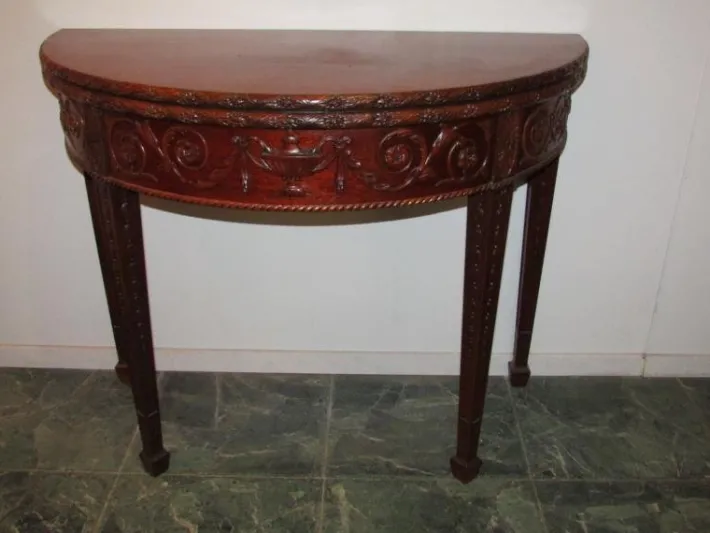
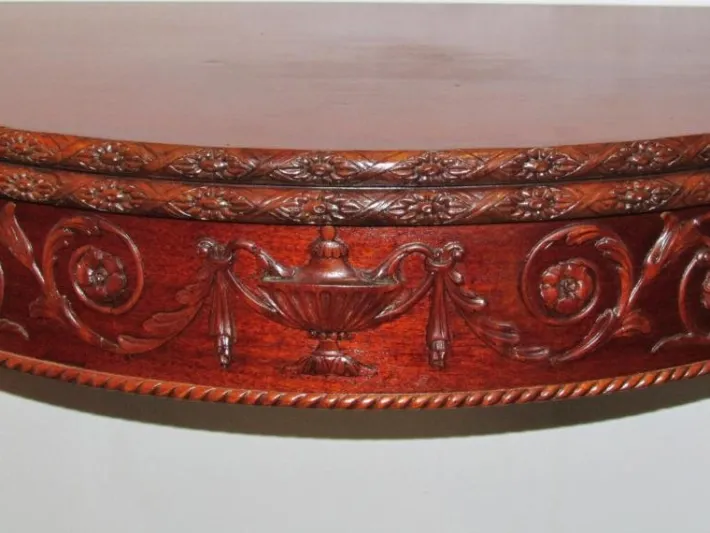
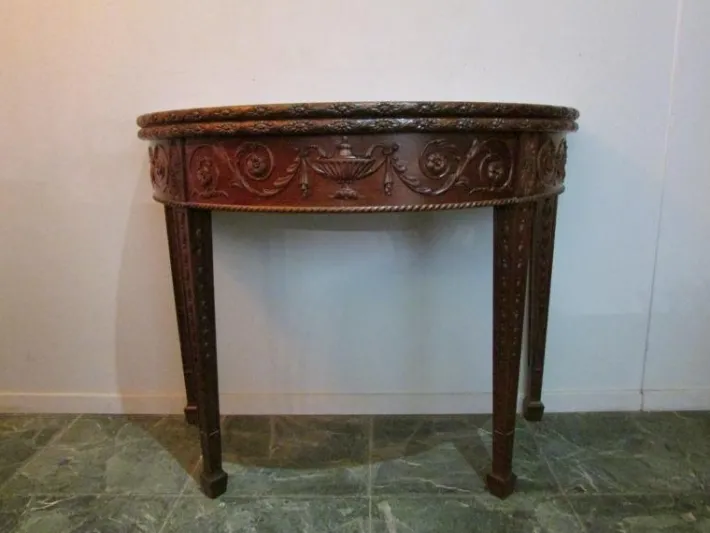
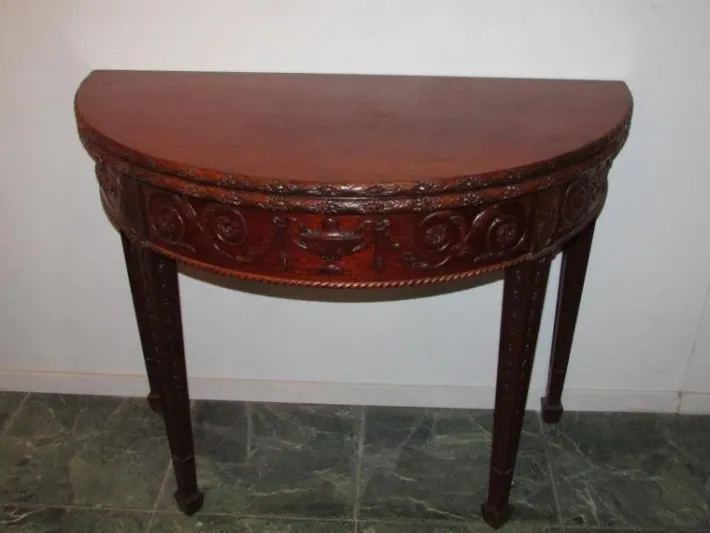
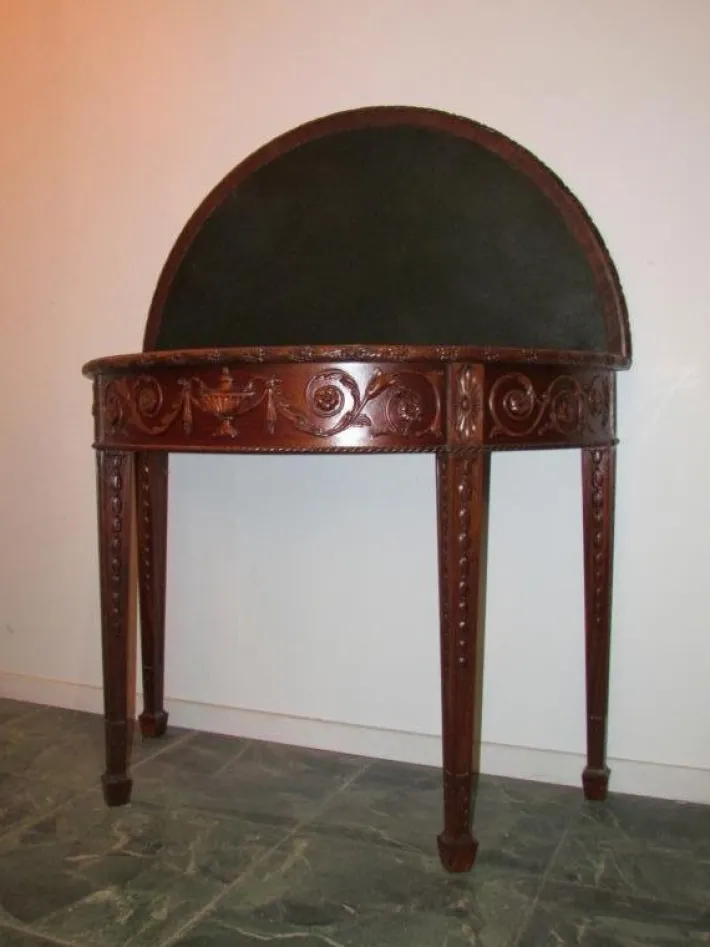
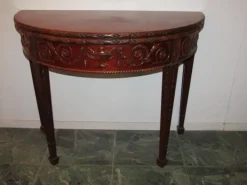
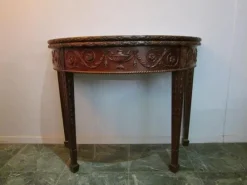
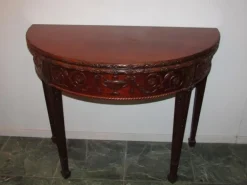
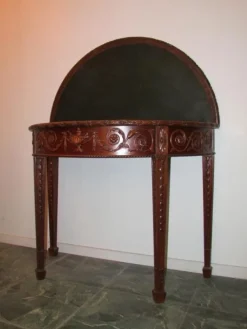
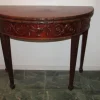
Pamono Antique Mahogany Foldable Wall Table in the style of Hepplewhite, 19th Century New
Original price was: $6,380.00.$124.99Current price is: $124.99.
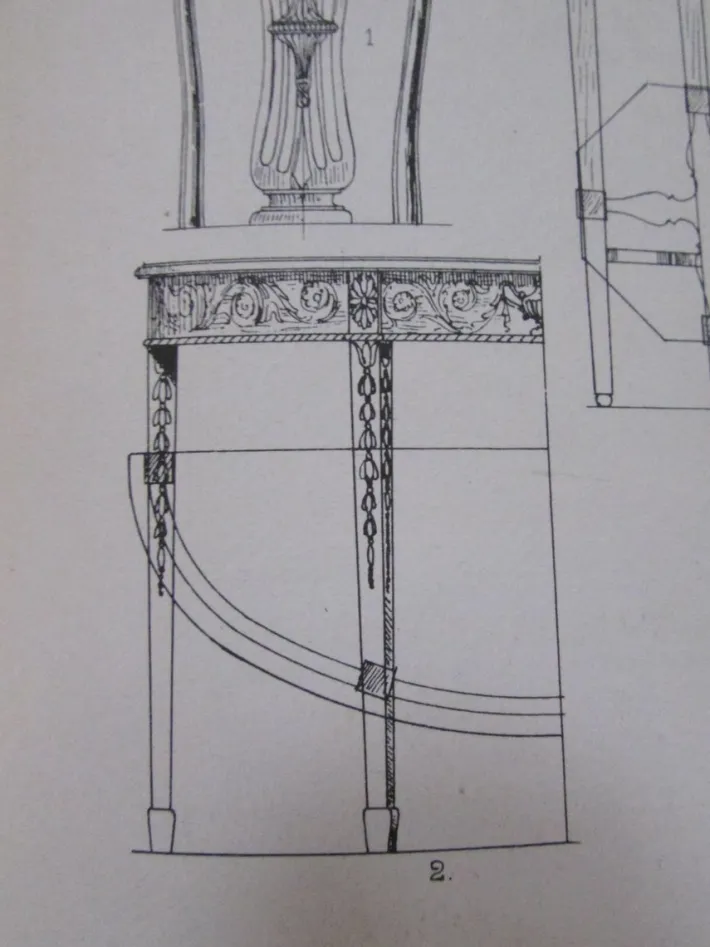
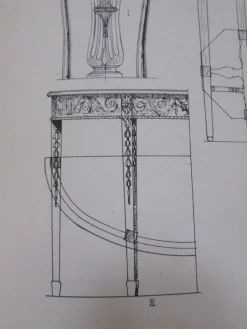
The design of this table is shown in the style manual
On page 225, by Ernst Rettelbusch (see photo)
Origin: England
Age: 19th century
Style: Heppelwhite
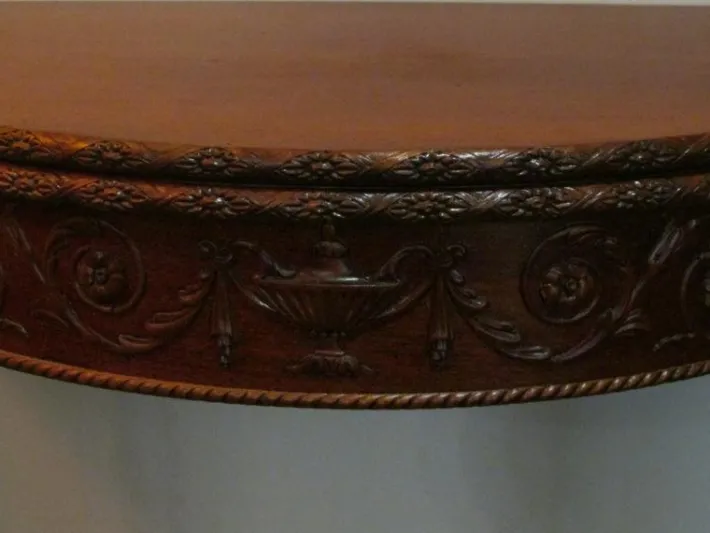
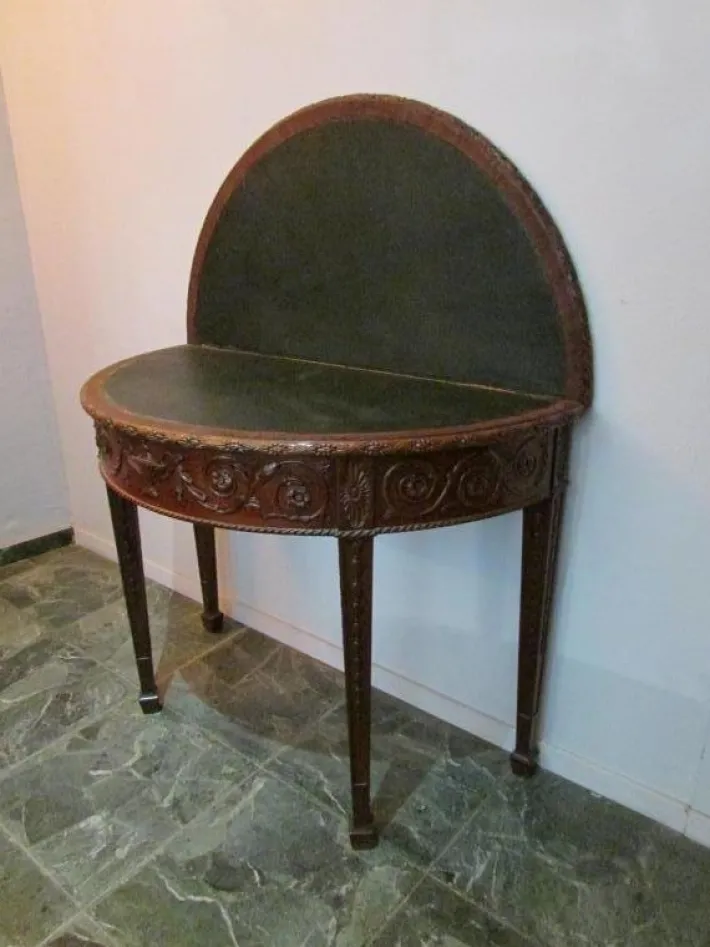
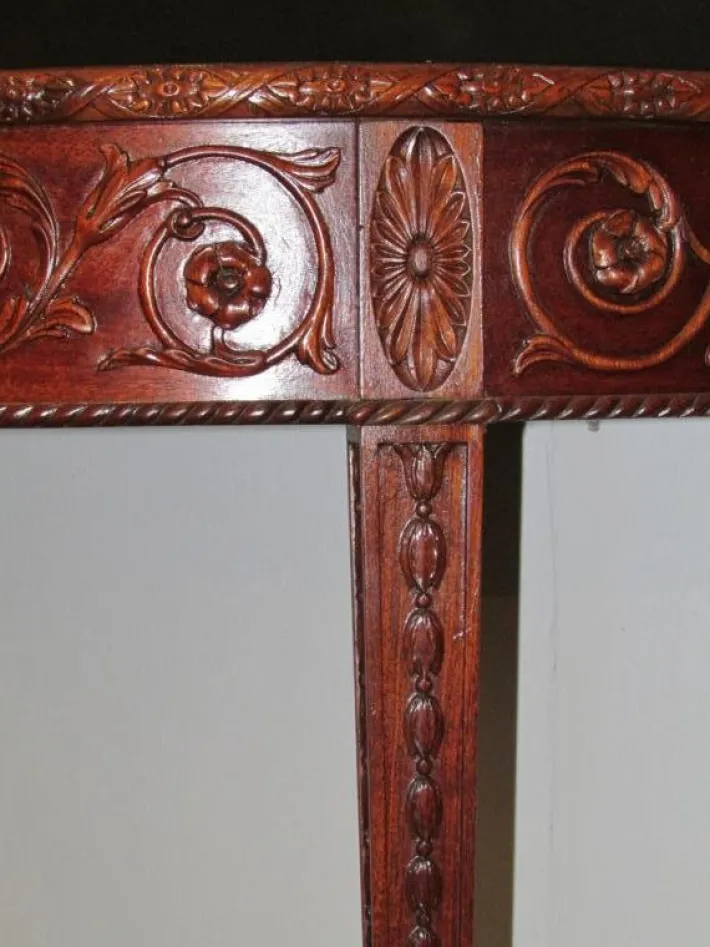
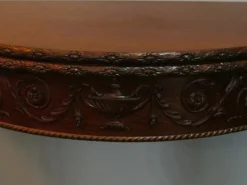
Material: Mahogany veneered on softwood
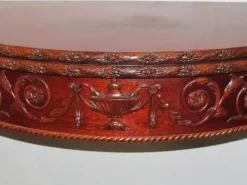
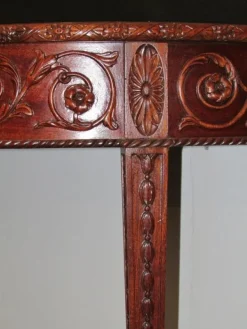
carved and contact crashes
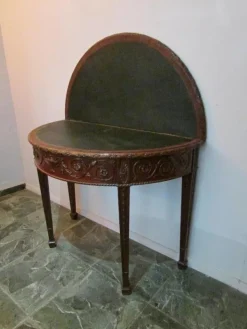
Leather area
Height: 78 cm
Width: 99 cm (diameter opened 198 cm)
Condition: good condition
HeppleWhite style, by the English artistry George Hepplewhite (died 1786, London) 1780-1785 based on the * Louis-Seizer developed furniture style.
While the light, petite furniture produced by HeppleWhite remained essentially limited to England at the time and formed an attractive contrast to the more cumbersome * Chippendale style, his work “The Cabinet-Maker’s and Upholsterer’s Guide” (2nd and 3rd edition 1789 and 1794) also the furniture manufacturers on the continent. The backrests of the HeppleWhite armchair are often oval or cardiac or shield-shaped and decorated with an ornament that consists of three ostrich feathers reminiscent of the * French lily and probably goes back to the coat of arms of the prince of Wales. Sometimes the decor is interpreted as a * grain harbor motif. The furniture designed by Hepplewhite are simple, well thought out in the construction and look elegant and elegant. Preferred types of wood were * mahogany and satin wood (silk wood), with deposits from exotic woods.
Source:
The great art lexicon of P.W. Hartmann
The seller assumes all responsibility for this listing.
About This Piece
Vintage Design
The design of this table is shown in the style manual
On page 225, by Ernst Rettelbusch (see photo)
Origin: England
Age: 19th century
Style: Heppelwhite
Material: Mahogany veneered on softwood
carved and contact crashes
Leather area
Height: 78 cm
Width: 99 cm (diameter opened 198 cm)
Condition: good condition
HeppleWhite style, by the English artistry George Hepplewhite (died 1786, London) 1780-1785 based on the * Louis-Seizer developed furniture style.
While the light, petite furniture produced by HeppleWhite remained essentially limited to England at the time and formed an attractive contrast to the more cumbersome * Chippendale style, his work “The Cabinet-Maker’s and Upholsterer’s Guide” (2nd and 3rd edition 1789 and 1794) also the furniture manufacturers on the continent. The backrests of the HeppleWhite armchair are often oval or cardiac or shield-shaped and decorated with an ornament that consists of three ostrich feathers reminiscent of the * French lily and probably goes back to the coat of arms of the prince of Wales. Sometimes the decor is interpreted as a * grain harbor motif. The furniture designed by Hepplewhite are simple, well thought out in the construction and look elegant and elegant. Preferred types of wood were * mahogany and satin wood (silk wood), with deposits from exotic woods.
Source:
The great art lexicon of P.W. Hartmann
Click here for full descriptionClose description
| Creator | Heppelwhite |
|---|---|
| Design Period | Before 1890 |
| Production Period | Unknown |
| Country of Manufacture | United Kingdom |
| Identifying Marks | This piece has been attributed based on archival documentation, such as vintage catalogs, designer records, or other literature sources |
| Style | Victorian |
| Detailed Condition | Good — This vintage/antique item may have some wear such as scratches and other signs of ageing. |
| Restoration and Damage Details | Light wear consistent with age and use, Patina consistent with age and use |
| Product Code | OKU-1523033 |
| Materials | Mahogany |
| Color | Brown |
| Width | 99 cm 39.0 inch |
| Depth | 50 cm 19.7 inch |
| Height | 78 cm 30.7 inch |
| Diameter | 78.0 inch |
Be the first to review “Pamono Antique Mahogany Foldable Wall Table in the style of Hepplewhite, 19th Century New”
Related products
Garden Seating
Beds & Bedroom Sets
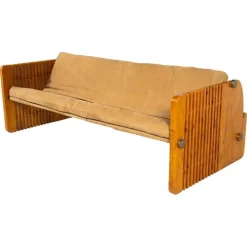
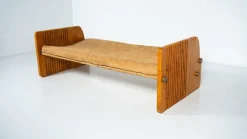
Daybeds & Chaises Lounges
Pamono Vintage Italian Daybed by Marzio Cecchi, 1970s Online
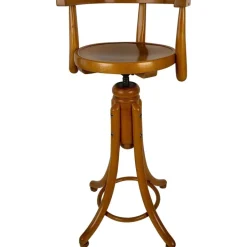
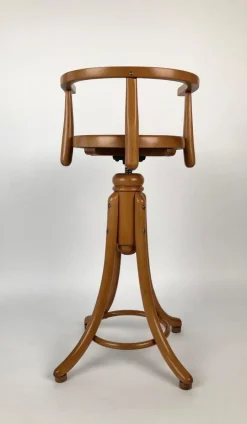
Children's Chairs
Pamono Barber Shop Children’s Chair from Thonet, 1900s Discount
Garden Seating
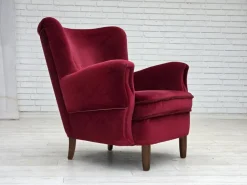
Lounge Chairs & Armchairs
Pamono Danish Armchair in Cherry-Red Velour with Beech Legs, 1960s New
Lounge Chairs & Armchairs
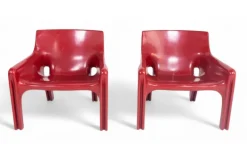
Pamono Vicario Armchairs by Vico Magistretti for Artemide, 1970s Best
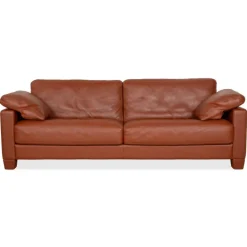
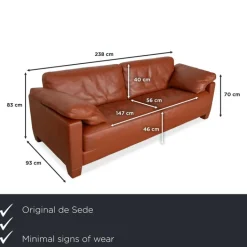
Couches & Sofas
Daybeds & Chaises Lounges
Children's Chairs
Children's Chairs
Pamono Set of Children’s Chairs by Svend Langkilde, 1970s Outlet
Login
Reviews
There are no reviews yet.